Sing Tao is a household name in Hong Kong, with brands readers have trusted across generations. But the team running its digital portfolio isn’t leaning on that legacy alone. They’re constantly asking how to reach readers wherever they are now: on phones, in line for the MTR, in bed, and in stolen minutes between meetings.
That mindset drove the launch of the Sing Tao Headline app in early 2022, which combined the depth of Sing Tao Daily with the speed of Headline Daily into a single, modern mobile experience. The app became the starting point for a broader portfolio evolution that includes The Standard, the English-language publication aimed at young professionals and Gen Z readers, and East Week, an entertainment brand with a loyal, image-heavy audience.
“Our websites and apps had been around for a while, but the user interface didn’t fit the modern internet,” says Samuel Yeung, Digital Lead at Sing Tao. “We knew first impressions mattered, and ours needed work.”
Each brand has its own identity and its own interface, but underneath they share the same foundation: a modern stack built to keep up with how people read now.
The hardest part wasn’t the technology
Launching new apps and redesigning websites is one thing. Building a product-led culture across an entire newsroom is another.
Sing Tao’s journalists and editors had been working with legacy CMS systems for years. Adopting new tools and new ways of thinking about their content wasn’t a straightforward conversation.
“We had to make it clear we weren’t trying to replace what they do,” Yeung says. “We were trying to show them the power of real-time data—that their articles are reaching more people than print ever could, and that we can actually see what readers want.”
The key was reframing data not as a judgment on the team’s work, but as a signal about their audience. Once editors understood that metrics like time on article and retention rate told them what readers genuinely cared about, the conversation shifted. Training was intensive, but the mindset shift mattered more than any single tool rollout.
Redefining what “performing well” actually means
In print, success was simple: circulation and ad revenue. In digital, there are hundreds of dashboards you could stare at. Sing Tao had to decide which numbers actually mattered.
They landed on depth over volume.
“I think everyone agrees it’s more valuable to have a thousand users who spend three minutes on an article than ten thousand who spend three seconds,” Yeung says.
That clarity filters into everything, including how they approach ad revenue. The programmatic and direct sales business still matters, but it’s now built on top of an audience that’s genuinely engaged rather than just passing through.
Friction is the enemy
When readers consume news in stolen moments (commuting, waiting, winding down) every extra tap or unnecessary load is a reason to leave. Sing Tao’s product team obsesses over reducing that friction.
One example: a simple “save for later” feature. A reader starts an article on the train, doesn’t finish it, taps save, and picks it up on the couch that evening. It’s not flashy, but it respects how people actually read, and it keeps them coming back.
On the content side, Sing Tao uses an AI-powered recommendation system to surface articles tailored to each reader’s interests. The system isn’t on autopilot, though, editors and journalists feed it by tagging their content with keywords in the CMS, which trains the data pipeline to understand relationships between articles. The AI handles personalization at scale, but the editorial judgment behind it is human.
“Our journalists are the ones actually helping the AI system,” Yeung says. “They input the keywords and tags. That’s how the pipeline learns what content is related.”
Push notifications: the sharpest tool in the drawer
If recommendations pull readers deeper into a session, push is what brings them back in the first place. It’s also where Sing Tao puts the most discipline.
“We can’t spam push notifications or people will get annoyed,” Yeung says. “I would definitely uninstall an app that does that to me.”
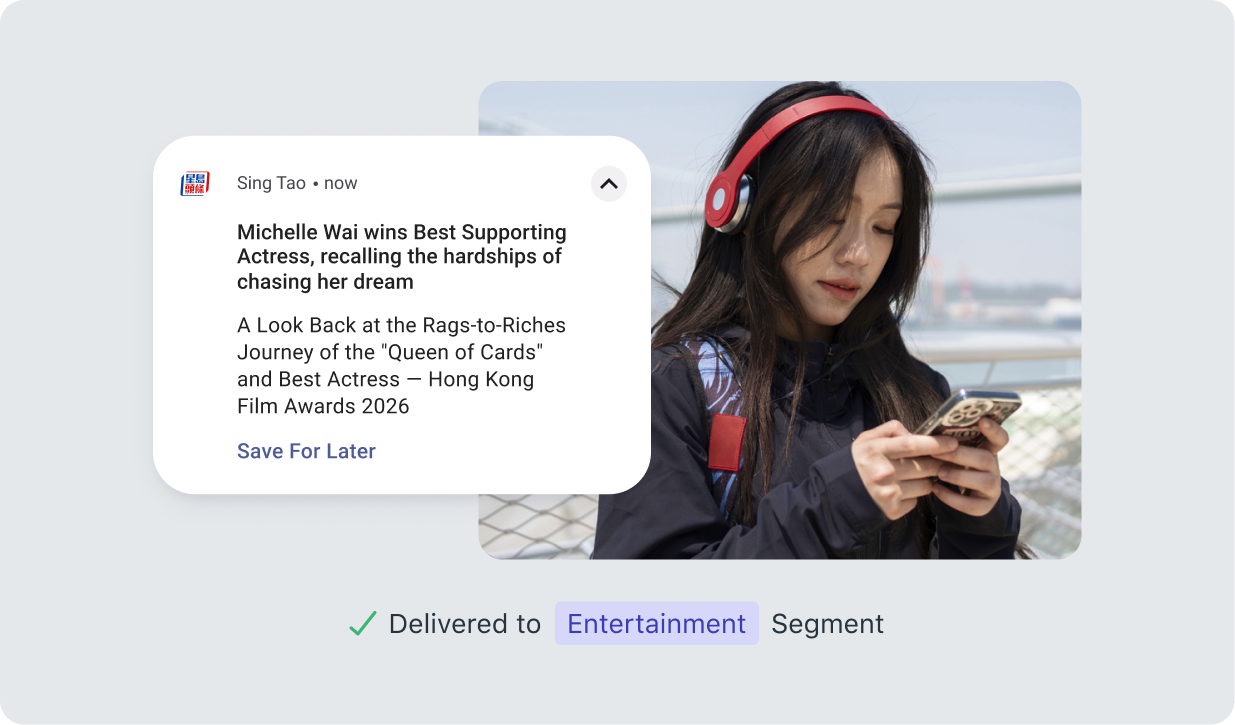
Sing Tao’s push strategy comes down to two things: editorial restraint about what’s worth sending, and tight segmentation about who it goes to.
On restraint, the team that manages push is deliberate about what qualifies: major world events, significant Hong Kong stories, breaking developments. That discipline is a big reason click-through rates have stayed healthy at scale.
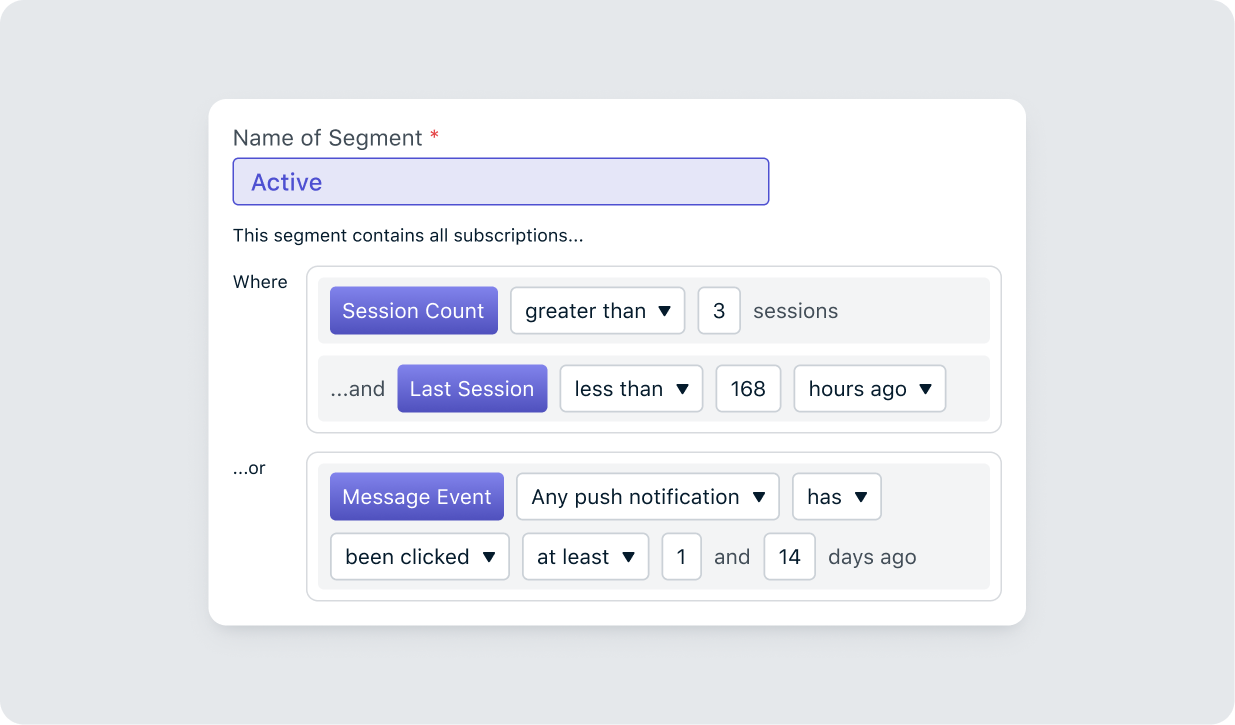
On segmentation, Sing Tao uses OneSignal to build audiences directly from reader behavior — the categories of content each user has previously read in the app. The editorial team builds and selects segments inside the OneSignal dashboard before launching each campaign, giving them tight control over who hears from them and when. The result has been a multifold lift in click-through rates compared to broadcasting the same notification to every subscriber.
The same segmentation engine also powers re-engagement. When a reader has been inactive in an app for 6 months, they get a nudge. Another goes out at 18 months. Paired with topic-based segmentation, lapsed readers come back to content that matches their interests rather than a generic “we miss you” message, and that drives millions of app sessions per month back into Sing Tao’s portfolio.
The same segments work for the business side too: partner and sponsored content can be routed to the readers most likely to find it relevant, so commercial pushes don’t erode the trust the editorial side has earned.
“We also make it really easy for users to switch notifications on and off anytime,” Yeung adds. “Obviously we want them to stay, but it has to be their choice.”
Think in years, not launches
When asked what he’d tell himself on day one, Yeung doesn’t hesitate: think long-term.
“Everyone gets excited on launch day. It’s natural to want to see the new feature go live, the new app get downloaded. But quick wins aren’t as important as long-term scalability. You should think about whether this feature will still be successful and maintainable in five to ten years, not just the next few months.”
It's a fitting philosophy for a company that's been around for eight decades and is now building for the next several. The brands are the same. The audience is the same. The way they reach them is completely different… and that's the point.
Sing Tao’s digital products are powered in part by OneSignal for push notification delivery and segmentation, with implementation and strategy support from regional partner True Metrics.
Read the Full Sing Tao case study